Friday, January 6, 2017

King's Survey: The Progress Party

In which we ponder the shape of change
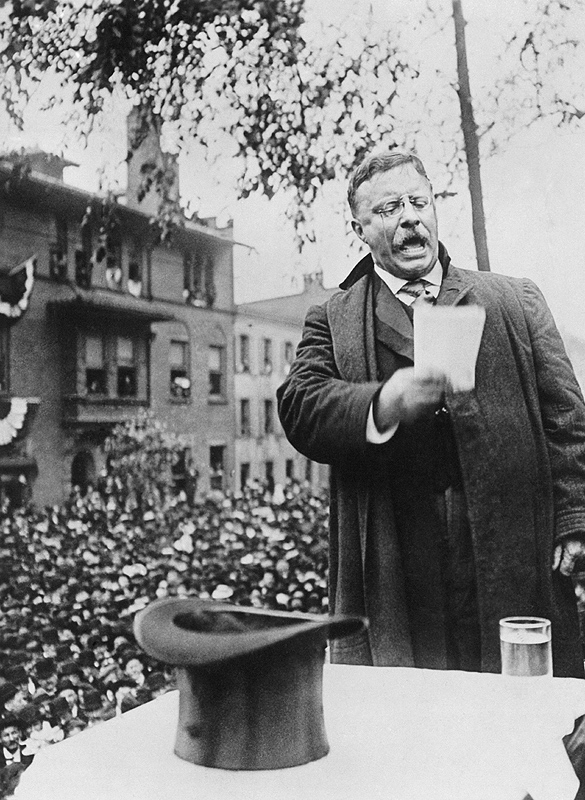
Roosevelt_on_the_Stump,_1912
Theodore Roosevelt on the stump, 1912
Jonquil, I have a question for you.

—Okay. What?
Do you believe in progress?
—Progress?
Yes, progress.
—What kind of progress?
Progress in a general sense: do you think that the conditions of everyday life tend to improve over time?
—I guess so.
You guess so.
—Yeah. More or less. Things gradually get better. I mean, there’s no more slavery, right?
—Racism hasn’t gone away.
—No. But it’s not as bad.
—Just a different form.
—Yeah, different form.
Does racism not change, simply change its shape?
—I’m not sure.
—I think so.
Well, I’m not sure there’s a right answer to that question. As you noted, Jonquil, my question was very general. Brianna, quite legitimately, focused it through a racial lens. What might we say about things like the state of material life in the United States. Would it be possible to say they’ve improved for pretty much everyone?
—I don’t see how you can’t say that. I mean, even the poorest people have stuff like cell phones and computers.
—People live longer.
—Yeah, but we still have to contend with Justin Bieber.
—Oh stop, Jonah.
Let’s say, for the sake of argument, that life has gotten better. That even the poorest people enjoy a higher standard of living, even as we’ll also stipulate that plenty of challenges remain, among them entirely new forms of exploitation. If we agree on that, why do you think that’s happened? Is it just a matter of a kind of social evolution? Or is it the result of active intervention?
—Well, a lot of laws have been passed.
That’s true. As Jonquil noted, we no longer have slavery. There are any number of others we could cite, ranging from laws against child labor to the much-celebrated Anti-Justin Bieber Act of 2017.
—I wish.
—Yeah, but I’m not sure that stuff can be seen as a matter of laws. I mean, a lot of laws happen because there are incentives, like financial incentives, that make them happen. And technology doesn’t happen because laws get passed.
Well, then, how does it, Adam?
—You get inventors who come up with new ideas.
Yeah, but how do those ideas happen? Where do they happen?
—I dunno. In laboratories, I guess.
And how are those laboratories paid for?
—By companies.
Yes, in some cases. But a great many of them come out of universities. And where does that money come from?
—The government!
Right, Sadie. Which is another way of saying by law, because budgets have to get passed by legislatures. In 1862, President Lincoln signed the Morrill Act, which created the state university system. State universities have long been hothouses of innovation, which they were designed to be. Of course, Adam, you’re right the private sector is also important. Maybe more important than ever these days. Again, I don’t think there’s any straight answer to the question.
—Now there’s a surprise.
—So why are we talking about this, then?
Here’s why: because the question about the existence and nature of progress is a historical perennial, and in a way, the story of American politicsand the story of British politics, from which American politics derive, even nowis defined by it. On one side, you have those who believe the world only gets better when you take active steps to improve it, which takes long, hard work. On the other are those who say that the world doesn’t improve, it only changes, and that those who think they can control the process are fooling themselves and subjecting everyone else to their arrogant pride.
—Okay. I get that. But why are we talking about this now, then?
Because we’ve reached a point in our journey together where this debate came into notably clear focus, in large measure because that first camp did a notably good charge of taking control of the political debate. We call this moment in our history the Progressive Era.
—Right. From the reading.
Yes. Since you’ve apparently done your homework, Kylie, why don’t you tell us what the Progressive Era was all about?
—Um, progress?
—Hey Kylie, I’m really impressed.
Yes, that’s a start. But I think you can add more.
—Well, yeah. It was this period, around 1900, when a lot of laws got passed.
Right. What kind of laws? Anyone can jump in.
—There were a lot of them. Stuff about big business.
—Yeah. And health. And kids.
—And environmentalism. Theodore Roosevelt.
All correct. A lot of these reform efforts date back to the 1890s, and were common at the city and state level. Then, at the turn of the century, they began to gather momentum.
—That’s because of Theodore Roosevelt.
Not entirely, Jonah. Certainly he was important. But a lot was happening long before he became president. And the fact that he became president was an accident.
—You mean because the other president …
William McKinley.
—Yeah, McKinley. He got shot.
Well yes, that was an accident. But Roosevelt became president because he was vice president, and he was vice president because the Republican Party tried to find a way they could muzzle him with job that was considered irrelevant at the time (the party chief at the time, Mark Hanna, warned them not to do this, and Roosevelt had never managed to stay quiet in any job he ever held).
—Were Progressives Democrats?
Yes. and Republicans, too. It was a movement that crossed party lines.
—So where was all this push for change coming from?
Exactly what I was going to ask you all, Yin. Why do you think it happened then? I realize this is a tough question, but give it a try.
—Well, it didn’t come out of nowhere, did it? I mean, we talked about the Populists. They wanted change, too. That was in the 1890s, right?
Yes, that’s true, and a good observation on your part, Sadie. The difference is that the Populists were basically farming people, and mostly came from the South and West. The Progressives were part of a new middle class, people who basically held office jobs (as opposed to farms or factories). And it was a national movement. Populists had some powerful ideas, like using primaries to elect senators, or and more regulation of railroads. Progressives made many of those ideas happen, along with some of their own. They were very effective at getting things done. And they did a lot: they regulated monopolies, created the first national income tax, created national parks, improved health and safety standards, and much, much more.
—Why was that? Why were they so good at getting things done?
A bunch of reasons. The first is that they felt very strongly that changes needed to be made. That’s important, but not sufficient. The second is that Progressives knew how to work the institutional ropes. They were products of the system—they worked in government, in schools, in charitable organizations of various kinds (many of them were women). A third is that they combined moral fervor with expertise; it was an age when science had new prestige and new practical applications. Finally, many of their opponents—radicals on the left, plutocratic businessmen on the right—lacked sufficient popular support to promote their own agendas as effectively. We’ve talked a lot about how industrial capitalism was like a wind that blew across the national landscape, and that some people liked it, and some people didn’t but everybody felt it. The Progressives felt they could do something about it—that they could make things better—and they acted on that belief.
Did they make things better?
So, kids, what’s the best answer to that question.
—It’s “You tell me, kids.”
—It depends?
Depends on what?
—Depends who you ask.
Bingo.
—Are you saying that if you were a Progressive you liked what happened, and if you weren’t you didn’t?
Not quite. There were some people who weren’t necessarily Progressives who nevertheless benefited. For example, if you were a woman who had an alcoholic husband who beat you, laws restricting drinking helped, as did the creation of shelters or settlement houses where you could go for help.
—Were the Progressives the ones who made Prohibition happen in the 1920s?
They were.
—Well, that wasn’t a very good idea.
Yes, it seems everyone agrees on that. (Funny how this is the one thing every adolescent seems to know about this period of U.S. history.) It also shows the less attractive side of the Progressives: they were widely perceived as busybodies who liked to regulate other peoples’ behavior.
—Yeah, I could see how that would get on my nerves.
Does that mean, then, Em, that you’re inclined to see the Progressives less as a set of people who improved things than a set of people who seized control—control was a big Progressive concept—and tried to bend the world the way they wanted it? That there’s no real progress, merely shifts in power?
—I dunno. I mean, it sounds like a lot of what they did was common sense. But there’s only so much improvement I can handle. Just ask my parents.
I understand. That’s why in our next class, we’re going to have a little Progressive simulation. We’ll see how you react.
Next: An exercise in amelioration

Wednesday, January 4, 2017

King's Survey: Imperial Resorts

USS_Maine_wrecked_in_Havana_Bay.png
Wreckage of the USS Maine in Havana Harbor, 1898

In which see the temptations, and complications, of empire


So, Emily, what are we going to do about Samoa?
—You tell me, Mr. K.
No, you tell me.
—That’s not my job.
Oh yes it is. You’ve got a job to do. You’re a student.
—Well then I need a raise.
Fine. I’ll double your salary.
—Aren’t samoas Indian food?
—No, that’s samosas.
—Oh. I love those.
Samoa refers to a set of islands in the Pacific.
—Well, in that case, I know what we should do. Make a trip there. I could use a vacation.
So, Em, you’re saying we should occupy Samoa.
—Well, I’m saying we should resort to going there, if you know what I mean.
As a first resort, or a last resort?
—What the hell are you two talking about?
Adam, I’m not entirely sure where Em is, literally or figuratively, but I’m talking about what the United States should do about the Samoan Islands, which have been in turmoil for the last decade or so (I should point out that we’re in the 1890s now). There’s been a long Civil War going on there, and the British and (especially) the Germans have been tussling for control. My question is what stance the United States should have.
—Why should we have any stance?
A fair question. Overseas involvement of this kind has not really been a major feature of U.S. foreign policy. But as you know, the world is changing. In particular, European nations are gobbling up territory in Asia and Africa. Actually, the U.S. has been increasingly interested in pursuing commercial interests around the world. In the 1850s, an American naval squadron under the leadership of Admiral Matthew C. Perry demanded that Japan open up its markets, a move that precipitated revolutionary changes in that country, and one which as led to an extraordinary military modernization of Japan, which, as we approach 1900, is on its way to becoming a major world power. (Perhaps Perry should have been careful what he wished for.) In 1867, Secretary of State William Seward, who served under President Lincoln, negotiated the purchase of Alaska from Russia, which a lot of people thought was a dumb idea—they called it “Seward’s Icebox,” or “Seward’s Folly,” until gold was discovered there in 1896. Pacific Islands like those in Samoa are increasingly valuable as coaling stations for ships (now that the age of sailboats is over), and any nation that wants to be a major-league player needs them. Germany in particular is playing catch-up—it only officially became a unified state in 1871—and is trying to rack up properties around the world while some are still available for the taking.
—Adam's right. I still don’t get why we should care about any of this.
Well, Sadie, maybe we shouldn’t.
—Maybe we should let the Samoans decide what they want.
There are two problems with that seemingly sensible approach, Kylie. The first is that the Samoans themselves are divided. One reason they’re divided is that outside powers are meddling in Samoan affairs. Which brings us to the second problem: letting the Samoans decide what they want in effect means letting the Germans (and maybe the British) take over everything. Do we want that?
—Why should we care?
Well, maybe we shouldn’t. But Germany has been expanding mighty rapidly, and that includes places like South America. When European powers go into places like Columbia and Venezuela, they lend a lot of money and generate economic development, but they also generate a lot of debt. And when those countries can’t or won’t pay, the European powers send gunships, which is a violation of the Monroe Doctrine. What I’m saying is that if we don’t try to check the advance of the imperialist powers, they end up pushing people around, and we may end up being among those people.
—Doesn’t sound like a good situation. I think we have to stand firm. Let’s take Samoa.
—Don’t they provide us with good NFL players now?
Indeed they do.
—All the more reason, then.
—Are the Samoans going to be better off with us? Have they been?
Well, you know, Yin, I don’t know. And you can attribute my ignorance on this count as an artifact of my ethnocentrism, or my imperialism, or my racism (take your pick or all three). Five Samoan islands are U.S. territory. They get to vote in primaries, but not presidential elections.
—That’s weird.
There are all kinds of quirks in the way the U.S. runs its overseas territories. In any case, I think Jonah’s right. Let’s agree to take Samoa.
—Really? Have we agreed?
Has anyone objected? I haven’t heard anyone say no. Good. We’re moving on.
—Hey!
—He’s making a point, Kylie.
About Cuba.
—Cuba?
—Uh oh. Here we go.
As we know, Cuba has been a Spanish colony for over 400 years now. They are horrible colonists. The Cubans have been in a state of almost perpetual rebellion against the Spanish for the last 20 years. Our presidents, most recently President McKinley, have tried to reason with the Spanish to be less brutal. But they won’t listen to us.
—I wonder why.
Well, it is true that some Americans have had their eye on acquiring Cuba since the 1850s, when proslavery advocates wanted to annex it. And it is also true that the assistant secretary of the Navy, Theodore Roosevelt, has been advocating a major U.S. naval buildup, and Cuba could be a nice piece of real estate. But let’s emphasize the humanitarian dimensions of the Cuban situation, shall we?
—Let’s not and say we did.
—Are we talking about the Spanish-American War now?
Indeed we are.
—So how did it actually happen?
Well, amid spurned offers for mediation, and some lurid press coverage in the United States, President McKinley sent a ship, USS Maine, to protect American interests in Havana. In early 1898, the Maine blew up.
—Who did that?
Nobody knows.
—How convenient.
Historians now belief it was an industrial accident. But there was a widespread belief—or, at any rate, a widespread assertion—that the Spanish did it. There was also an intercepted diplomatic cable that referred to President McKinley in unflattering terms.
—What did it say?
That he was “weak.”
—Oh well, then, you have to go to war.
That spring, the United States did so. Undersecretary Roosevelt, who was probably taking on more responsibility than his boss would have liked, had dispatched ships to the Philippines, which were also rebelling against Spanish rule. At the Battle of Manila Bay, the U.S. wrecked the Spanish fleet. A few months later, the U.S. invaded Cuba (Roosevelt left his desk job to lead an attack as an officer at San Juan Hill, which made him a national celebrity). Though the operation was in many ways amateurish, the Americans won there too. By the fall of 1898, the Spanish sued for peace.
—So that’s how we got Cuba.
—We didn’t get Cuba, did we?
Right.
—Who?
Both of you. The U.S. had declared war on a basis of liberating Cuba—Cuba libre! went the slogan—so simply taking the island would have posed political problems at home and abroad. And here I should point out that there was significant opposition to the war in the United States.
—Thank God. I was beginning to think we were all jerks.
So Cuba became independent. Sort of. There was a provision to the U.S. treaty with Cuba, the Platt Amendment, which basically said: you’re free to do what you like, unless you do something we don’t like. For the next sixty years, Cuba became a de facto U.S. colony—except for the naval base at Guantanamo Bay, which was actually U.S. property. Which it remains, even after the Cuban revolution of 1959, when the nation became Communist. But the U.S. did pick up possessions from the war in Guam (also out in the Pacific) and Puerto Rico. Which remain U.S. territories, with varying degrees of ambivalence on their part of its residents, to this day.
—What about the Philippines?
Ah, good question. So I told you that the Filipinos were in revolt against the Spanish. They were very happy to get help from the Americans. They were a good deal less happy when the Americans hesitated to leave after the Spanish defeat while the U.S. government decided what it wanted to do with the Philippines. The Filipinos under the leadership of a man named Eduardo Aguinaldo led an insurrection against the U.S. occupation for a few years after the war ended that was finally put down. The Philippines became U.S. territory until World War II, when it was occupied by the Japanese. After the war the Filipinos got their independence, but again, the U.S. maintains a huge naval installation there.
But if the Philippines was a U.S. possession, Filipinos were not U.S. citizens. There was a lot of litigation about this, but the Supreme Court finally ruled that the Constitution follows the flag, but not necessarily right away.
—What’s that supposed to mean?
Go to law school and find out. We’re getting out of my pay grade, Adam.
—So are you saying you want a pay raise, Mr. K.? Should I double your salary?
Nah, Em, I don’t want the hassle of more responsibility than I already have. But I do want to ask you a final question.
—You with the questions! Go ahead. I’ll accept the hassle of responsibility of thinking for the whole class.
Great, though your classmates can pitch in. My question is: What’s happening to the United States’ place in the world in these closing decades of the 19th century?
—We’re becoming a bunch of jerks.
—We’re becoming a world power.
—Same thing.
—Not it’s not. It’s like Mr. K. said about the Samoans. If we don’t do it, someone else will. And that someone else will be worse than us.
—Really? The Cubans were oppressed by the Spanish. Then they were oppressed by the Americans. What difference does it make?
—Actually, that’s an interesting question. Do we know who was worse? Can you tell us, Mr. K.?
I don’t know that I can give you a clear-cut answer to that, Kylie. Partly it depends on what your standards are. Which is the kind of thing I’m hoping conversations like these will help you develop.
—Good luck with that.
Well, you can’t blame a guy for trying. Or maybe you can. I hope you won’t.


Monday, January 2, 2017

King's Survey: Promising Land

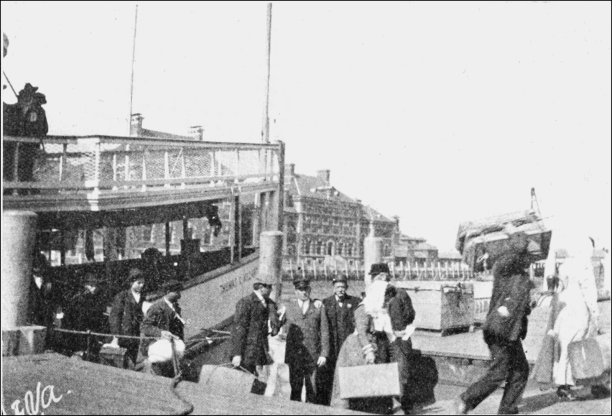
immigrantsEllisIsland
Immigrants arrive at Ellis Island, 1904

In which we see how the imperatives of immigration change—and don’t


OK, kids, it’s time to reconsider the question of whether or not to go to Mars. It’s been 250 years now, and I think we should take another look at it.
—At what?
Going to Mars.
—I don’t get it.
—First week of class, remember? The colonists and crossing the ocean?
—Oh yeah. So why are we talking about that again?
A lot has happened since the colonies like Virginia and Massachusetts were founded, Ethan. Europeans have settled the continent, a revolution has been waged and won, the Civil War is over. So it’s a new New World, as it were. On the other hand, there are still a lot of the same issues—beginning with the fact that there are still a lot of people who are being pushed and pulled to these shores. You could say that the world has changed. You could also say that the underlying issues and circumstances haven’t changed. So I thought we could talk about it.
—I don’t get why we’re doing this now.
Well, Jonah, space travel has become big issue here in the late 19th century. This is actually the third big wave. The first was in the colonial era. The second, as we discussed, was the wave led by the Irish in the decades before the Civil War. The war slowed the traffic, but now in the closing decades of the century, it’s up sharply again. The origin of the travelers has shifted, though. Before, it was northern and western Europe. Now, increasingly, it’s southern and eastern Europe: Italians, Russians, the diverse ethnic groups of the Austro-Hungarian empire, many of them Jews.
Sadie, I want to go back to you. When we discussed this subject back in September, you were among those who were pretty sure she wasn’t going to venture across the Atlantic Ocean, which seemed so big and vast, like going to another planet. I want to point out that the technology has improved a lot. There are steamships, not sailboats. You’re less likely to drown in a storm. Or to catch an infection (though we can’t rule out either). The travel conditions are also much better. There’s an infrastructure, from ticket agents to government clerks, who manage the whole process. So do you think you’re ready to take the leap now?
—I dunno, Mr. K. It’s still a big trip.
It is. The journey is still thousands of miles. And it still often takes weeks. And a large proportion of the people who go never come back.
—I mean, I know it’s 250 years later and everything. But I still can’t see wanting to go.
—Why would anyone go?
Well, you know, Kylie, the usual reasonsthose haven’t changed, either. Religious persecution is sometimes a factor. Economic opportunity. Political developments. These are all things that led Puritans, Quakers, and adventurers of all stripes make the trip in the 1600s and 1700s. Now they’re leading Bavarians, Syrians, and Poles—and Jews from all those places—to leave home for America in the late 1800s.
—But slavery is over, right?
Yes, for the most part. Russia abolished serfdom in 1861—or, I should say, the Russian Tsar, Alexander II, did. With the stroke of a pen. Sometimes dictatorship is a more efficient instrument for social justice than democracy. Brazil had slavery until 1888. But there’s no real international slave trade the way there had been. That said, there were some pretty desperate people making their way here in the late 19th century. Many had been subject to pogroms, mob violence directed against Jews, for example. Slavery can often be relative.
—So Sadie might not have a choice.
No.
—I think one of the big differences is that there are a lot more immigrants here now. The United States is much more populated.
That’s true. If Sadie does decide to take a space ship across the ocean, it’s likely that there will be little colonies of family members, religious groups, or networks of like-minded people to help her find a place to live or a job. The odds are that she’ll end up in a big city, like New York, Philadelphia, or Chicago. But it’s also possible that she’ll end up on a farm—in Minnesota, for example, if she’s Scandinavian. Texas, maybe, if she’s German. A smattering of Slavic people on the Great Plains. Once she arrives, there will be any number of mediating institutions to help her make the transition: houses of worship; fraternal organizations like the Knights of Columbus (which was founded by Italians); foreign-language newspapers, and local political organizations. The Democratic Party was particularly important in this regard; it was the party of the immigrant in northeastern cities, just as it was for farmers in the south and west.
—So were the Republicans the anti-immigrant party?
Basically, yes, Adam. From the very beginning, the Republican Party was that of the White Anglo-Saxon Protestant (and here it’s worth pointing out that a large proportion of immigrants in this period were Roman Catholic, who, as a function of such hostility and their own instinct toward solidarity, often turned inward in form their own institutional infrastructure with schools, hospitals, universities, and the like). Republicans weren’t only WASPs; as the “Party of Lincoln,” African Americans tended to vote with them for a full century after the Civil War. Lincoln was also a factor in reaching out to German immigrants, some of whom flocked to the GOP banner. It’s also worth pointing out that immigrants themselves could be ambivalent about immigration, both of their own kind as well as other ethnic groups.
—Why was that?
Well, for one thing, there was concern that such people could take away good jobs. More commonly, the opposition was cultural; “our” crowd was more serious, respectable, etc. Subsequent waves, the suspicion went, were much less so. To some degree, this was a class conflict—the first wave of an immigrant group often came with professional skills or capital that later waves lacked. Actually, for some immigrants, America was viewed as a place to make an economic windfall and use the proceeds to go home and buy land or start a business. By some estimates, almost half the people who came here ultimately went back. This was especially true of the Chinese, for example, who would eventually be shut out as a result of the Exclusion Act of 1882, the first group of people to be excluded on a racial basis.
—So immigration wasn’t really space travel after all.
Well, it was more like a space shuttle. They don’t run that often. And again, for most, the trip was permanent. So Sadie is right to think hard before she commits to making the trip, assuming, of course, that she has much choice, i.e. that she’s not the victim of a pogrom, is dealing with severe economic privation, has a husband or father who’s making her go, and so on.
—Sadie, I really think you should go for it. I mean, I know it’s hard and everything—hard to leave home, and hard to deal with a foreign country. But this is a good place. You can make a good life here.
—Yeah, Sadie. Maybe you can get a hot American husband.
—And like Mr. K. says, you really can go back if it doesn’t work out.
—Oh all right. I guess you guys have convinced me. I’ll take a chance for a new life.
Thatta girl, Sadie.

Friday, December 30, 2016

King's Survey: Pushing

479px-MopWringer-45In which we see a hear a custodial view of history
Hey, Milton.
—Mr. King. OK if I clean up here?
Please, Milton: Abe. Mop away. I’m on my way out.
—Abe. Mr. Abraham King.
How are you, Milton?
—Oh, the usual. It’s Thursday. That’s good.
How long you been here now?
—Twenty-seven years. My uncle got me the job. He was here for thirty-three. We overlapped the last four.
That’s a lot of institutional memory.
—My uncle, that’s my mother’s older brother, was here when the building opened. I was part-time for a few years. This has always been a good school. The kids are good.
I’m guessing this is a decent place to work.
—The benefits are good. The pay is OK, but the benefits are what keep me here. My nephew does security at a private school. There, they outsource everything. My wife needs lots of medications. Still costs a lot, but this school is better than most with the insurance.
How long you been married?
—Twenty-nine years. We have a daughter. She went to South Hudson. She’s an accountant now. Expecting a grandchild.
Good for you. Something to keep you busy in the coming days, for sure.
—Yeah, well, I have to stay busy. Don’t want to retire.
So what do you do with your spare time?
—I’m happy with a Yankee game and a beer. Giants in the fall. Knicks in the winter. Once in a while I read.
Oh yeah? What do you read?
—I like American history. The Revolution. I really like reading about that.
You don't say. What is it that you find compelling about the Revolution?
—Those guys were pretty impressive. Smart. They had courage. And they made this thing that has really lasted.
Well, as you know, those guys had shortcomings. And this thing they made shows signs of fraying.
—Yeah, I know, I know. But who doesn’t have shortcomings? And what lasts forever? I think people expect too much.
Why do you think that is?
—They want too much. And they fret too much chasing what they want. And then they get mad when the gears of their lives get all jammed up. People should appreciate what they have.
I can see that. But a lot of people are getting less these days. Like your nephew. They make a living, but it’s harder. As you pointed out, he’s not doing as well as you.
—That’s true. Then again, what I have didn’t exactly fall into my lap.
A lot of people have more than you and have worked for less to get it.
—I may be looking at one of them.
You might.
—But I’m not going to spend a lot of time on that. There was a time when I might have. But not anymore. I don’t see the point. It’s the expectation that life is fair that gets people in trouble.
Well, if that’s true, it’s those guys you admire so much who have made the mischief, no? You seem to be saying that the American Dream is the problem.
—Am I in class now, Abe King? I don’t have all the answers. Making it up as I go along. This is where I am now.
Understood and agreed, Milton. Sometimes I have a little trouble turning off the teacher switch. Sorry about that.
—It’s all good. You have a good evening now, Abe.


Thanks. I’m going to work on that. Or maybe not work so hard on that.

Wednesday, December 28, 2016

King's Survey: Silver Mettle


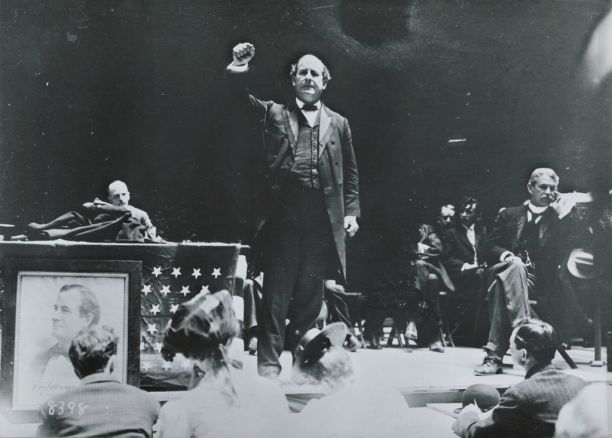
1024px-William_Jennings_Bryan_1896_presidential_campaign
William Jennings Bryan campaigning for president, 1896

In which we see that the teacher doesn’t always get to set the agenda

OK, kids, so now we’re going to turn to another poem. One of my favorites.
—I gotta say, Mr. K., you pick some weird ones. Not stuff we do in English class.
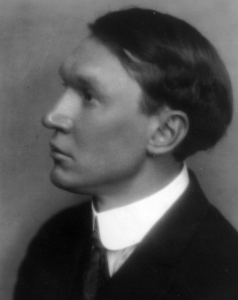
Nicholas_Vachel_Lindsay_1913
Vachel Lindsay, 1913
Not this one, either, Kylie. This one is called “Bryan, Bryan, Bryan, Bryan,” and it was written by a fellow named Vachel Lindsay in 1919 about the presidential election of 1896. Lindsay, known a hundred years ago as “the Prairie Troubadour” for his syncopated style of repetitive poetry, is today remembered as a minor poet, a kind of Walt Whitman knockoff.
—We have done Whitman.
I reckon you would.
—Whitman's got a syncopated style of repetitive poetry. Sounds like hip-hop.
Well, I suppose it was in its way, Ethan. One of the reasons I want to share the similar Lindsay with you is that this poem is written from the perspective of a sixteen year-old boy—in other words, someone about the same age as you. I thought you’d be interested in comparing perspectives. Here he is talking about “the Boy Orator of the Platte,” William Jennings Bryan.
—Who’s he?
—It was in the reading, dummy.
He brought in tides of wonder, of unprecedented splendor,
Wild roses from the plains that made hearts tender
All the funny circus silks
Of politics unfurled
Bartlett pears of romans that were hone at the cores
And torchlights down the street, to the end of the world
—Sorry. I gotta ask: who was Bryan again?
 He was the Populist as well as Democratic candidate for president in 1896. Now let me read you this pass
—Wait: Populist and Democrat?
Yes. It was a little complicated because while Bryan headed both tickets there were different vice-presidents on each ticket.
—Really? Weird. What were their names?
Sorry to say I don’t remember. Actually, it doesn’t really matter. One was a Gold Bug and the other was s Silverite. As I was say—
—You know, I did the reading, but I really didn’t get the difference. The Gold Bugs liked gold. But why?
They wanted the dollar pegged to gold, which in fact it was. Every U.S. dollar in circulation had a specific smidgeon of gold sitting in a bank somewhere to match it. Silverites wanted to peg the dollar to silver, which was more plentiful. There were literally tons and tons of it, thanks the Comstock Lode in Nevada, a massive supply. Lindsay notes this
—Why did they want that?
We did talk about this the other day, no?
—We did. But I’m still a little confused.
As I said then, pegging the dollar to silver will lower its value.
—Right. So if I’m in debt, like a lot of farmers were, having that dollar be less valuable makes it easier for me to pay back.
Exactly. On the other hand, if you’re a banker who lends money to a farmer, you want to be sure that money will be just as valuable after the farmer pays it back. But if you’re William Jennings Bryan and his supporters, the people you care most about are being crushed by the gold standard. When Bryan storms into Madison Square Garden to take the Democratic nomination for president—he was like a rock star in those days—he gave a famous speech in which he said, “You will not crucify me on a cross of gold.” It’s right here in the poem
—Sorry. I just want to clarify one thing. What you’re talking about here is deflation, right?
Yes. That’s right. Good, Adam. Deflation. Dropping prices. Big problem for farmers. When prices go down, as they were doing in those days, farmers sold their crops for less money. That made it even harder to pay back their loans.
—But lower prices are good, aren’t they?
Depends who. We talked about this the other day. Workers in cities like cheaper food. This is one of the reasons why the Populists are having a hard time forging links with other segments of the American working class. A sad and familiar story. Divided we fall.
—Bryan lost that election.
Right. Some of my favorite lines in the poem are about that. “Defeat of my boyhood, defeat of my dream.” Here, let’s look at this stanza
—Mr. K.?
Yes? I’d really like to get to the poem now, Chris.
—Sorry, but class is over.
Oh. Damn. Defeat of my lesson plan, defeat of my meme.