Showing posts with label ". Show all posts

Wednesday, February 23, 2011

Up From Mount Vernon


Denzel Washington, by way of Booker T. Washington


The following is part of a series of posts about Denzel Wasington, part of a larger project on Hollywood Actors as Historians. --JC


Two facts about Denzel Washington seem worth mentioning at the outset: 1) He’s the son of a minister; and 2) His father was absent for much of his adolescence. It’s possible to make too much of these facts, but his career trajectory suggests they counts for something.
Washington was born on December 28, 1954, the second of three children. His mother, Lennis, a one-time gospel singer, hailed from Georgia but was raised in Harlem. His father, Denzel Sr., a Virginia native, was named after the obstetrician who delivered him, a Dr. Denzel.
Denzel Jr. was born, and spent his childhood, in Mount Vernon, New York. A small city in Westchester County situated between some of the meaner streets of the Bronx and the leafier lanes of Bronxville, Mount Vernon is a liminal space in metropolitan New York, and suggestive of what appears to have been a precariously middle-class youth in the interracial neighborhood of Fleetwood. Washington’s father worked for the city water department and at a local retail score; his status as a Pentecostal minister while living in Mount Vernon apparently more an aspiration than a career (his son remembers listening to congregations consisting of no more than a handful of people). Washington’s parents divorced when he was fourteen, and his father returned to Virginia, continuing his ministerial work until his death in 1991.
The pivotal figure in Washington’s life was his mother. A beautician who owned and operated a series of shops, her extroverted personality and entrepreneurial pluck were traits she passed on to her son.  In a brief autobiographical sketch published in 2006, Washington described the job his mother got for him at a local barbershop when he was 11 or 12:

The place was run by a man named Jack Coleman, who took me on as a kindness to my mother. At least that’s how I always look back on it. I thought it was the best job in the world. I had all kinds of hustles back then. You walked into the shop and I could tell right away how much money you had. I’d check out your shoes and I’d just know. I’d have people bringing me their dry cleaning and I’d take it out and deliver it back to their house. I’d run all kinds of errands. They’d step out of Mr. Coleman’s chair and I’d be on them with a whisk broom, brushing off their collars saying, ‘Man how you doin’ today?’ Or ‘Man, you look good.’ There was money to be made all day long, especially if you were respectful and solicitous.

Somewhere, Booker T. Washington was smiling. 
As Lennis Washington was quick to recognize, however, her divorce had a destabilizing effect on her son. He rejected his childhood piety – forbidden by his father to go to the movies, he sneaked out to see blaxploitation movies like Superfly (1972) – and began getting into fights. Though he had never been a particularly good student, she managed to get him admitted to New Windsor Oakland Academy, a school for largely affluent and white students in upstate New York. Washington’s primary interests in high school were athletic rather than artistic (he played football and basketball), though he did play piano in a rock band and experimented with acting at summer YMCA camps.
His grades, however, did not improve enough to gain him admission to Yale or substantial enough of a scholarship to attend Boston University, two schools he hoped to attend. Instead, he enrolled at Fordham University in 1972. He initially was pre-med, but his academic performance was so weak that he dropped out for a while. Working at a post office and as a sanitation worker led him to return. He refocused his academic career by majoring in journalism – and, after a successful stint doing theatrical work as a counselor at the YMCA camp he attended as a child, drama. Landing lead roles in a university productions of Eugene O’Neill’s The Emperor Jones and Shakepeare’s Othello proved pivotal. It led him, while still an undergraduate, to a part in Wilma, a made-for-TV movie in which he portrayed the boyfriend of legendary track star Wilma Rudolph (played by Cicely Tyson). It was in making the movie that he met Paulette Pearson, the woman who would eventually become his wife.
Following his graduation from Fordham, Washington won a scholarship for graduate work at the American Conservatory Theater (ACT) in San Francisco. This was a three-year program for those who successfully made the cut for the second year, which he did. But Washington’s growing restlessness led him to strike out on his own in Los Angeles, where work was hard to find. He did manage to land a role in the 1981 film Carbon Copy, in which he played the long-lost black son of a white man (George Segal). But that film sank without a trace. So he returned to New York, and sought stage roles. In what proved to be a fruitful success, he portrayed Malcolm X in When Chickens Come Home to Roost, a 1981 off-Broadway production that caught the attention of many critics, as well as the aspiring Spike Lee, who nursed a lifelong ambition of making a biopic of Civil Rights leader. Another role that would lead to a movie part was Washington’s appearance in the original 1981 production of Charles Fuller’s A Soldier’s Play, which he would reprise in the 1984 Norman Jewison film A Soldier’s Story.
It was in television, however, that Washington would win the fame and financial security that he would leverage, like Clint Eastwood and Daniel Day-Lewis, into a movie career. As Dr. Philip Chandler in the long-running NBC series St. Elsewhere (1982-1988), Washington established a paradigmatic identity as an intelligent, accomplished, and imperfect professional. A recurrent character in an ensemble that included future stars Helen Hunt, Alfre Woodard, Mark Harmon and others, the show followed a set of doctors working at a beleaguered Boston hospital, and was one of the most successful dramas of the 1980s.
Washington was able to use time off from the show to squeeze in a few movies. In the 1984 TV production License to Kill, he played the supporting role a young prosecutor who needs all his wits in parrying a defense lawyer representing a drunk driver. In addition to Jewison’s (low-budget) film version of A Soldier’s Story, Washington also won a small but juicy role as a corrupt politico in Sidney Lumet’s Power (1986). That movie proved to be a commercial and critical disappointment. So was Cry Freedom, a 1987 Richard Attenborough film about white South African journalist Donald Woods (Kevin Kline) and his relationship with anti-apartheid activist Stephen Biko (Washington). Though the movie was much criticized for its lopsided focus on the Woods rather than the more compelling Biko, Washington was repeatedly singled out for praise in a performance notable for his mastery of a South African accent.
By this point, he was a full-time screen actor. Washington made a pair of British projects that were not widely seen. In the maundering For Queen and Country (1988) he plays a veteran of the Falklands War who returns to his South London ghetto only to find that in the newly Thatcherite Great Britain, the St. Lucia-born soldier is no longer a British citizen. That same year he starred in the light-hearted The Mighty Quinn as a police chief on an unnamed Caribbean island – another nice job with an accent – who juggles corrupt politicians while trying to protect a childhood con-artist friend framed for a much more serious crime. 
But if Washington had made it as an actor by the end of the eighties, he had not yet broken through as a movie star, notwithstanding the praise of informed observers like Roger Ebert. The turning point came in 1989 with his work in yet another ensemble project, the Edward Zwick Civil War film Glory, based on the real-life exploits of the African-American Massachusetts 54th Regiment. For his performance as Trip, a misanthropic runaway slave, Washington received an Academy Award as Best Supporting Actor. From that point on, he would be a headliner.
But not an especially prominent one. While Washington would continue to generate critical praise with ambitious performances in movies like Mo’ Better Blues (1990) and Mississippi Masala (1992), these were still relatively small-scale productions. Conversely, his big-budget projects of the time, Heart Condition (1990) and Ricochet (1991), were widely considered critical and commercial flops. He did receive an Oscar nomination as Best Actor for Malcolm X (1992), a movie with real artistic (and, to a lesser degree, box-office) heft. But reviews were mixed in his next turn as Don Pedro in the Kenneth Branagh production of Shakespeare’s Much Ado about Nothing (1993). As one Washington biographer has noted, “Washington was at a crossroads in his career. Each of his movies up to that point either had an all-African American cast or been a box office disappointment. Washington needed to star in movies that would get mass exposure among whites as well as blacks. Then he would cross over to being viewed simply as an actor, regardless of his race.”While this is not exactly true – Glory did not feature an all black cast, and, as we’ve seen, Washington had played roles that were not specifically written for African Americans – he had not quite managed to hit that sweet spot of racial integration without a sacrifice of racial identity.
Beginning in 1993, however, Washington appeared in a string of projects that did achieve this. Some of them, like Philadelphia, (1993) were hailed as great films. Others, like Crimson Tide (1995), were slickly made popcorn movies that sold buckets of tickets. Still others, like The Siege (1998), were controversial (in this case, for its portrayal of Muslims). And a few, like Devil in a Blue Dress (1995), were expensive box-office duds. But Washington gained the marquee status of people at the very top his profession, a stratosphere inhabited by stars like Julia Roberts, Tom Hanks, and Tom Cruise. And there’s some reason to think he will outlast all of them.
Of course, the primary point here is not to establish Washington’s place in the Hollywood pecking order. As with all my subjects, his success is primarily important in the way it has allowed him a relatively high degree of control over his artistic choices, and what those choices reveal about him. One thing they clearly reveal is that the boy in the barbershop never disappeared: over the course of the last thirty years Washington has demonstrated a remarkable work ethic as one of the most tireless actors in Hollywood, and one with a large appetite for making money (though that has never been an overriding concern). What they also show is the unique degree to which Washington has embodied the material hopes, fears, and values of a rising black middle class in the wake of the Civil Rights movement.  This is something that merits a closer look.


 Coming Soon: Washington as a professional playing professionals

Wednesday, June 23, 2010

Flood Plain


Dave Eggers illustrates the deeply human dimensions of the Hurricane Katrina disaster through the eyes of an immigrant in Zeitoun

This gripping piece of journalism, published last year by McSweeney's, a San Francisco publishing house founded by the author, has just been issued in paperback by Vintage Books , and is slated to be the source for an animated film slated to be directed by Jonathan Demme in 2011. At the simplest level, the book tells the story of how an American family underwent and survived the catastrophe that was Hurricane Katrina. But it resonates on a lot of levels: as a deeply personal chronicle of a not-quite natural disaster; as an immigrant saga depicting the limits of the American Dream; and as a sobering, if not harrowing, case study of eroding civil liberties that can't help but trouble every U.S. citizen.

One reason why the book works as well as it does is the beautifully executed artlessness of its narration. Eggers alternates the point of view in brief passages between the recollections of Muslim Syrian immigrant painting contractor Abdulrahman Zeitoun, and his native-born wife Kathy, a convert to Islam. This method, interspersed with flashbacks of the couple's respective backgrounds, is the organizing strategy for the run-up and experience of the hurricane itself. But it diverges once Zeitoun gets swept up in the improvised criminal justice system of the Federal Emergency Management Agency, as we experience Kathy's panic and despair over her lost husband for a stretch and then witness Zeitoun's horrific ordeal, amid declining health, in the section that follows. Through it all, Eggers manages to maintain editorial restraint, which makes their ordeal, simply expressed in their own terms, all the more compelling. So does the way we occasionally experience moments of wonder, even beauty, in the stillness that follows the storm and the understated, stunning decency of a man who so savored helping women and animals before he was swept up into the cataclysm that his wife, who fled with their children, unsuccessfully begged him to flee New Orleans as well.

The depiction of Katrina's ravages is upsetting enough. But what may be even worse are the privations the Zeitouns suffer once he's thrown into a jail built by prison inmates in a matter of days -- amid the chaos around them -- and run by an unaccountable FEMA. (Hell of a job, Brownie.) Here we see the crimes of Guantanamo Prison, which, however deplorable, are nevertheless committed on foreign shores, replicated on U.S. soil. Zeitoun is arrested for a crime he didn't commit, incarcerated without the right to make a phone call, and excoriated for even touching the walls of the cage into which he was thrown. Here is a second train wreck that follows the first, with the same sense of awful inevitability. You can't bear it, but you can't stop reading, either. Yes, of course, in this moment of chaos something approaching martial law was necessary. What's disturbing is how badly planned and executed that martial law was -- the sheer senselessness of it, even months and years later.  The only really redemptive element in the story is Zeitoun's faith -- not in America, which is broken, probably for good, but for a loving Allah who provides shelter in a man-made storm.

In a way, Zeitoun is revealing less in what it shows about those awful days in August and September of 2005 than as a lightning-illuminated snapshot of the ongoing decay of an egalitarian American democracy. To be sure, the egalitarian strand in American democracy has never been the only or even dominant one -- American democracy has co-existed with slavery and plutocracy, for example, for hundreds of years, and at times been defined by precisely such boundaries. But the convergence between social, political, and economic equality and democracy, which crested in the middle-third of the twentieth century, has been receding ever since.  In offering a story of those British Petroleum chairman Carl-Henric Svanberg-- whose company has plunged Louisiana into disaster again -- recently called "small people," Zeitoun documents how viscerally the land of the free is shrinking. And how fast.

Friday, April 16, 2010

Left with Bruce


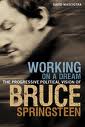
David Masciotra's Working on a Dream: The Progressive Political Vision of Bruce Springsteen steers a little too far to the left

In a 2005 omnibus review of Bruce Springsteen literature, A.O. Scott of the New York Times made the regrettable assertion about my book Born in the USA, which had just been reissued in a second edition. He wrote that it had "the effect of installing [Springsteen]  in a stable full of academic hobbyhorses rather than in a vital constellation of ideas." The regret, naturally, was all mine: Scott was right. Such, I've come to conclude, is the characteristic vice of what might be termed Springsteenians (who can be distinguished from the partially overlapping category of habitual Springsteen concertgoers I'll call BruceHeads). Like God, we tend to make Springsteen in our own image -- or, at any rate, the image we'd like him, and ourselves, to be.

In Working on a Dream, young David Masciotra, a graduate student at Valparaiso University, makes the case for Springsteen as a committed left-wing artist-activist. There is, of course, a considerable body of evidence for him to make this case, whether in terms of what Springsteen has said, done, and recorded in what is now a vast body of work. Actually, one of the best things about Masciotra's book is the sustained attention he gives to Springsteen's music of the last decade, work which has tended to be overlooked in terms of popular attention but which is likely to stand up about as well as any he produced in the previous thirty years. This is also the decade in which Springsteen has come out as an avowed partisan, campaigning for Democrats John Kerry and Barack Obama. Masciotra makes the most of these connections and many more, in a widely contextualized study that stretches from Edward Hopper to the Amadou Diallo case.

The problem is that he tends to overplay his hand. Most of Masciotra's chapters have the word politics in the title -- "the politics of urban decay," "the politics of invisibility," "the politics of American power," and so on. But while he makes some good points along the way, the analysis manages to be overly broad and reductive at the same time. In a chapter on the politics of isolation, for example, Masciotra compares the protagonist of Springsteen's 1980 song "Stolen Car" to that of both Fyodor Dostoevsky's Crime and Punishment and Ayn Rand's The Fountainhead. While I do think such a parallel has at least some merit (I myself have made the comparison between the narrator of this song and Dostoevsky's Raskolnikov), the isolation in question is far more psychological than it is political. Notwithstanding the nightmares of some 21st century American liberals, the United States resembles neither Tsarist Russia nor a libertarian utopia, and conflating the three this way doesn't make a whole lot of sense.

A similar overstretch is apparent in Masciotra's handling of religious imagery in Springsteen's music. He's determined to downplay the role of Catholicism in Springsteen's work ("listeners who equate Springsteen's theological language with devout Catholicism are clearly shortsighted"), emphasizing its humanistic dimensions. This is a mistaken approach, in my opinion, but a plausible one nonetheless, depending on what you mean by "devout." It's a good deal less plausible to assert that Springsteen is at heart a Confucian, because like the Analects, Springsteen's music embraces "mutuality in human relations, loyalty, love and trust." To which one can ask: What major religion does not?  It also leads one to wonder, given Springsteen's legendarily difficult relationship with his father, how Masciotra would square it with the concept of filial piety so central to Confucianism. Such spiritual muzak trivializes faith in the name of ecumenicalism.

Other times, Masciotra misses ambiguities in Springsteen's work that don't necessarily comport with political orthodoxies of left or right. A good example is his reading of "Long Walk Home," from Springsteen's 2007 album Magic, a record I think we would both agree is an underrated gem in the Springsteen canon. Masciotra believes the song "reaffirms lost values." To make his point, he quotes the final verse, in which a father addresses his son:

That flag flying over the courthouse
Means certain things are set in stone
Who we are, what we'll do and what we won't

I think it's fair to say that there's an affirmation of community here -- and a very deep vein of skepticism that exists alongside it, allusions to sin of commission as well as omission jostling (or, perhaps more accurately, buried) with a sense of limits that we call honor. I've never talked with Bruce Springsteen, or been in anything other than a stadium-sized room with the man. But listen to anyone who has, particularly from the early days, and you'll be told that  he has a strong individualistic streak, to put it mildly. Actually, it's hard to see how he could have become who he has without it.

Finally, there are problems with the writing: Masciotra has apparently never been taught that adjectives are guilty until proven innocent. Thus we are told, for example, that "the problems and challenges that confront America at this pivotal moment in its short history are vast, and on certain days, when hope fails to emerge from the monstrous shadow cast by understandable cynicism, they appear to form an insurmountable mountain." A workaday piece of newspaper analysis by Robert Reich manages to be of "monumental importance." Yet Masciotra can also be dismissive, as when he says "the typical American middle-class worker is bordering on monolithic in his approach to life, operating according to the functionality of a machine that is programmed to work and spend the earnings on commodities." If Springteen's music has taught us anything, I would think, it would be to avoid language like that.

Still, it's hard not be hopeful about Masciotra's earnestness. And every once in a while, he turns a felicitous phrase, as when, mindful of some of the counter-currents that lace through the music, he says "Springsteen's vision can best be described as a preservative progressivism." Masciotra represents a new generation of Springsteen fans, and we believers would like to propagate the faith. So it's in that spirit that I tell him that sometimes, when you want to get a clue of what's going on, the most important thing you can do is, simply, listen.

Wednesday, August 12, 2009

That old Russo magic


A master novelist is back with That Old Cape Magic, a salty tale of marriages made and unmade in coastal New England

Summer's here and the time is right for another Richard Russo novel.

Over the course of the last decade or so, new Russo fiction has arrived in time for summe
r every few years, perfect vacation reading. Every one of his eight books, which date back to 1986, is like an excursion, and although the destinations are not always prepossessing -- his early novels had rundown upstate New York settings -- you're typically plopped down into small communities with a wonderfully witty (or entertainingly witless) cast of rogues, led by an amiable protagonist you can't help but like immensely as he makes his rounds while engaged in various kinds of shuttle diplomacy among parents, children, siblings, or other scoundrels. Russo novels typically feature hapless men and generally sharper, and thus exasperated, women. Sometimes a dowager figure looms over the proceedings, difficult but whip-smart. By the time they're all over, the main characters (boys in the early going, boyish men more recently) have figured out a thing or two, and so have you. The best book of Russo's early phase is Nobody's Fool (1994), which was made into an unjustly overlooked Robert Benton movie starring Paul Newman.

In recent years, the locus of Russo fiction has shifted to New England -- Maine, and espec
ially recently, Cape Cod -- and there's been a demographic shift as well toward more upscale characters. His 1997 send-up of academic life, Straight Man (this one set at a Pennsylvania university) was laugh-out loud hilarious. Empire Falls (2001), about a declining Maine mill town, won a Pulitzer Prize in 2002 and was made into an HBO miniseries, also starring Newman in one of his last roles. Russo's last novel, Bridge of Sighs (2007), essentially fused a series of strands in his literary persona by telling a multi-generational story of three upstate New York friends, two of whom stay behind while the other becomes a successful painter in Venice.

Russo's latest offering, That Old Cape Magic, has familiar accents but gets reconfigured in
a new permutation. This is, in its entirely, a story about relatively affluent people, some of whom make their money in Hollywood (a motif that emerged in his recent 2003 short-story collection, The Whore's Child). It also features a set of college professors, returning us to the realm of Straight Man. Cape Cod and Maine resurface as settings, as they did in Empire Falls. Once again, the main theme is inter-generational tension, and a child's desire -- this time relatively late in life -- to finally come to terms with family legacies.

That Old Cape Magic is the most slender of Russo's novels, perhaps in more ways than one. And it rides a line of bitterness further than he has before, risking his readers' sympathies. I don't think it ranks with his best work. But even Russo on a bad day is always worth reading.

The story this time, bounded by a pair of weddings, concerns Jack Griffin, a former hack screenwriter turned college writing teacher. When the story opens, he's on his way to the Cape to attend the wedding of his daughter's best friend -- and to spread the ashes of his recently deceased father. The trip brings back two sets of memories. The first concerns his parents, a pair of professors who are frustrated by having to settle for a pair of jobs in the "Mid-fucking-west" (the only way they ever refer to it), but who seek a balm for their psychic wounds with the perfect Cape rental every summer, with the result that no summer vacation home is ever quite right. The second concerns the origins of Jack's own marriage 34 years earlier, specifically a "Great Truro Accord" informally forged on the Cape between Jack and his wife Joy that the two would eventually leave Los Angeles and settle down with a family (in Connecticut, as it turned out). Unsettled on both counts -- and by his impossible mother, who importunes him with aggravating cell phone calls -- the trip triggers a downward spiral.

The second half of the book is occurs a year later, when Jack's own daughter gets married in Maine. By this point, his marital life has been turned upside down, and he's lugging around two sets of ashes instead of one, somehow unable to spread either. He has to parry the hostility of various in-laws, and juggle relationships with characters with whom he met or saw at the last wedding. It's obvious to just about everyone what Jack needs to do -- including Jack himself -- but he's somehow paralyzed, belatedly realizing that the various choices he's made in his life that he's understood as a repudiation of his parents in fact has effectively replicated them. Will he finally come to terms with his past and truly move forward? (Take a wild guess.)

That Old Cape Magic is probably Russo's funniest book since Straight Man. Sometimes the humor is gentle (though not without an edge), like in this passage from early in the novel:

Joy's relationship to the English language was not without glitches. She was forever mixing metaphors, claiming that something was "a tough line to hoe." Row to hoe? Line to walk? Her sisters, Jane and June, were ever worse, and when corrected all three would narrow their eyes dangerously and identically. If they'd had a family motto, it would be You Know Perfectly Well What I Mean.


Other times the book gets downright zany, with pratfalls that include a defecating seagull, multiple fender benders, and well-deserved sluggings. One suspects Russo's increasing involvement in the film industry has given his storytelling an increasingly punchy and visual quality, though there's always been an unpredictably anarchic quality to it.

The portrayal of Jack's mother gives one pause. She's perfectly awful: caustic, self-centered, and ruthless in hunting down and exposing the vulnerabilities of others. If Russo didn't have a relatively balanced track record in his portrayal of women, I'd be tempted to call it downright misogynistic. Yet it's also clear as the novel unfolds that she serves a meta-narrative function about reliability of memory, a motif sustained via a story-within-a-story subplot. This stratagem raises another concern, however: that Russo's fiction, which for all its myriad variations nevertheless rests on an autobiographical foundation, may be retreating into a smaller compass in which a successful writer writes about writing.

Let me be clear about the origins of such a notion on my part: greed. I've been so happy with Russo's work that I hate to contemplate anything that may indicate his inability to keep delivering such satisfying work indefinitely. (That and the prospect of his mortality reminding me of my own.) So let me end on a note of gratitude. The fiction of Richard Russo has enriched my life at those times I'm most likely to savor it, i.e. my summer vacations. So I recommend him that you might enjoy similar pleasure -- and put a little extra money in his pocket. Russo reports in his acknowledgments that own daughters recently got married. If only in his wallet, that's gotta hurt.